US Turns to BRICS+ as China Focus Fades
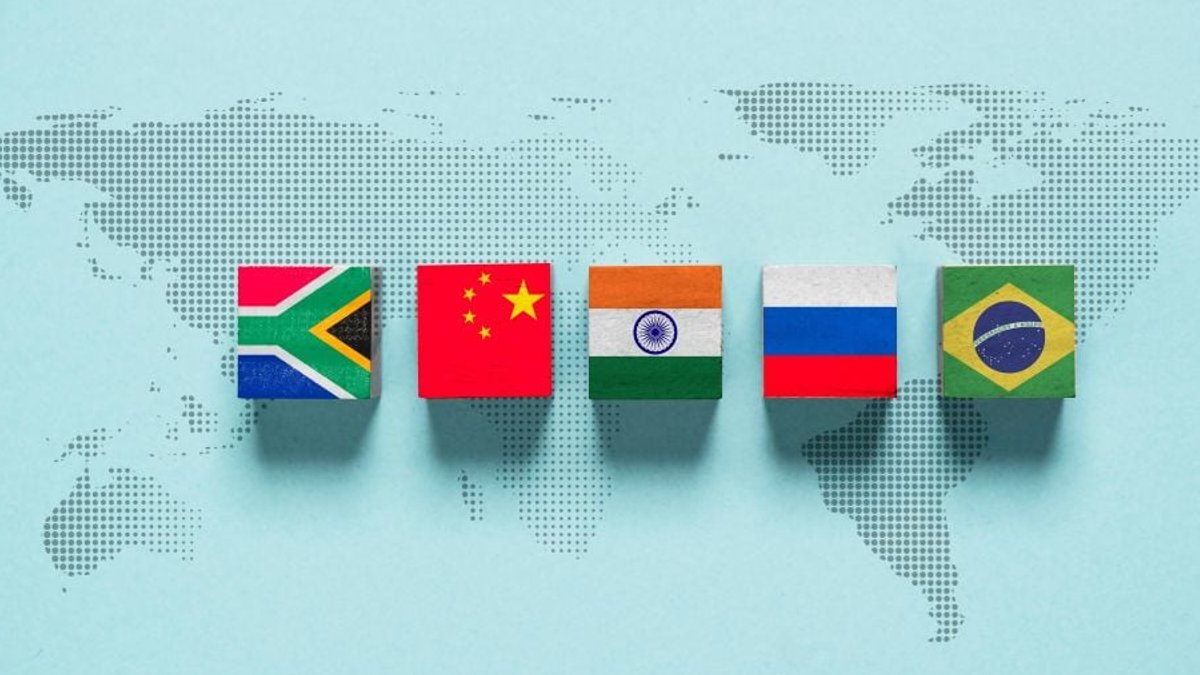
The United States and China dominate global GDP, but the emerging BRICS+ bloc—Brazil, Russia, India, China, South Africa and several other economies—offers a broader platform for tackling issues that no single nation can solve alone.
Economic weight beyond the two superpowers
According to recent estimates, the United States produces about $30 trillion in nominal GDP, while China’s economy contributes roughly $20 trillion. Japan, Germany and India each generate about a quarter of China’s output, and about a sixth of the United States’. If the European Union is treated as a single economy, its projected 2025 GDP of $21 trillion puts it on par with the two giants.
The United States’ economy exceeds the rest of the G7 combined, and China’s size is nearly double that of the other BRICS+ members. Together they account for more than half of the increase in global nominal GDP this century, meaning policies in Washington or Beijing ripple worldwide.
Yet three factors complicate the narrative that only these two matter. First, population trends have shifted. India now outnumbers China, and together the United States and China represent fewer than 25 % of the world’s eight‑billion‑plus people. Europe’s population exceeds that of the United States, and most BRICS+ nations host more than 100 million residents.
Purchasing power and shifting balances
Nominal GDP figures are heavily influenced by the strength of the dollar. Adjusted for purchasing power parity (PPP), China’s economy would swell to about $44 trillion, effectively doubling its nominal size. India’s PPP‑adjusted GDP sits near $18 trillion, while Indonesia exceeds $5 trillion, placing it among the world’s ten largest economies.
If the dollar were 30 % weaker, the United States’ dominance would look far less imposing, both globally and within the G7. In that scenario China would be roughly equal to the United States, and the gap between China and the rest of the BRICS+ would narrow substantially.
India’s GDP has already almost doubled in the past decade, driven by a youthful demographic and robust growth rates.
Related: The Most Stylish Royal Engagements of All Time (Spanish Focus)
India’s growth reshapes global markets.
When confronting challenges such as climate change or pandemic preparedness, the sheer scale of India’s 1.4 billion‑person population makes it impossible to ignore. Europe and other emerging powers likewise hold the demographic weight needed for any meaningful solution.
Political cohesion beyond economics
The BRICS+ group has matured into a political force, not merely an economic alliance. Its formation was initially championed by the finance ministries of Brazil and Russia, indicating that China does not unilaterally dictate the bloc’s direction. Scholars from the University of Hong Kong note that each member pursues its own complex motives, and the roles of China, India and others differ from common assumptions.
For Western governments, this evolution means rethinking engagement strategies. European nations, for example, must pursue internal reforms while also leading global initiatives that attract BRICS+ participation. Such efforts could enhance relevance and encourage cooperative solutions.
From a broader view, the rise of the BRICS+ illustrates how economic diversification can reshape global governance. When multiple large economies converge on shared challenges, the pressure on any single superpower to dominate policy wanes. This diffusion of influence may encourage more balanced, multilateral decision‑making, which could benefit both developed and developing nations.
Evidence of the impact smaller economies can have comes from the United Kingdom’s 2014‑16 independent review on antimicrobial resistance, chaired by a former Treasury minister. Despite its modest economic size, Britain’s advocacy raised a global health threat, showing that persuasive leadership can emerge from any corner of the world.
In sum, while the United States and China remain economically formidable, the combined demographic, purchasing‑power and political clout of the BRICS+ and other emerging markets make them indispensable partners in addressing worldwide challenges.

China's Edge Stems Beyond State Subsidies


