China’s Edge Stems Beyond State Subsidies
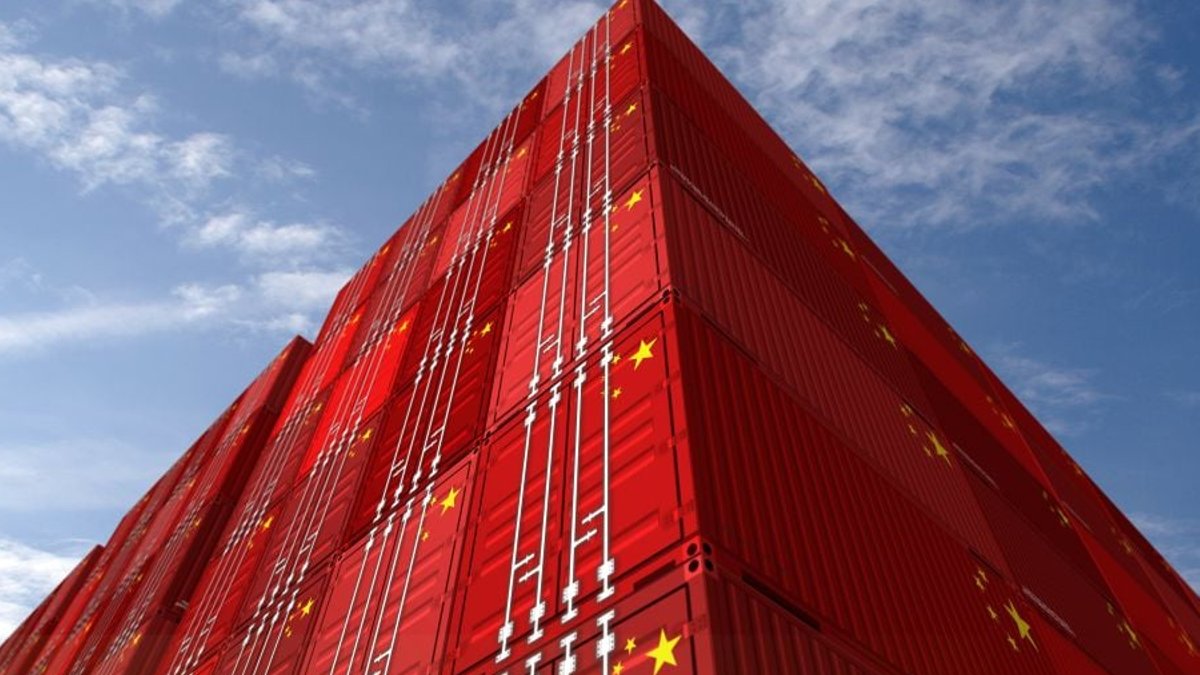
Chinese firms have taken leadership positions in sectors once thought to be dominated by advanced economies, including electric vehicles, batteries, industrial robots, solar panels and artificial intelligence.
OECD report’s subsidy focus under scrutiny
The Organization for Economic Cooperation and Development released a report that attributes much of this success to state subsidies. The analysis, however, rests on a methodology that treats loans priced below China’s loan prime rate (LPR) as subsidized finance. The LPR, at roughly 3.5% for five‑year terms, is close to an average commercial lending rate, not a preferential policy rate.
For comparison, yields on 30‑year government bonds sit near 2.2% and 10‑year bonds around 1.7%. A firm borrowing at the LPR pays more than the sovereign itself, meaning ordinary commercial borrowing could be mischaracterized as government support.
Data from more than 5,300 listed non‑financial Chinese companies show that most bank lending still goes to state‑owned enterprises in traditional sectors such as infrastructure, utilities and construction. By contrast, many of the most competitive firms rely increasingly on retained earnings, equity financing and capital‑market instruments.
Related: Tech oligarchs seize control of major firm
Changing subsidy intensity and market conditions
Between 2023 and 2025, the intensity of subsidies for listed new‑economy firms fell sharply. This decline coincided with tighter local‑government debt limits and a national push to reduce regional protectionism. During a period of shrinking subsidies, China’s emerging industries recorded their strongest gains.
The market remains resilient.
Discussion of China’s current‑account surplus often links the rise to an export‑led strategy. A simpler explanation points to the domestic side: after the property downturn, investment fell more than national saving, widening the surplus as a mechanical outcome of the saving‑investment gap.
Explaining China’s competitiveness therefore requires looking beyond subsidies. The country now houses multiple stages of industrial development within a single market of more than 1.4 billion people. Metropolitan hubs sit alongside extensive manufacturing networks, creating an internal “flying geese” pattern that moves production to lower‑cost inland regions while keeping the value chain domestic.
Related: La Caisse backs mid-market firms with new funding push
Scale alone does not account for the advantage. Dense supplier networks shorten feedback loops, a large consumer base speeds commercialization, and intense competition pushes firms to innovate quickly. The resulting industrial strength reflects structural capabilities rather than financial handouts.
While subsidies have supported certain sectors, they no longer dominate the narrative of Chinese industrial success. The ecosystem of talent, market size, supply‑chain depth and rapid innovation appears to be the primary driver.
Looking ahead, China faces challenges such as boosting household consumption, improving resource allocation and reducing external imbalances. Yet these issues are unlikely to erode the capabilities that have propelled its firms forward. Stronger capital markets, deeper domestic demand and a more unified national market could reinforce the underlying strengths that have emerged.
The OECD’s focus on subsidy levels raises an important question: how effectively have those subsidies translated into industrial performance? The answer suggests that subsidies were never the whole story, and as the Chinese economy matures, they explain far less than the report assumes.

Tech oligarchs seize control of major firm


