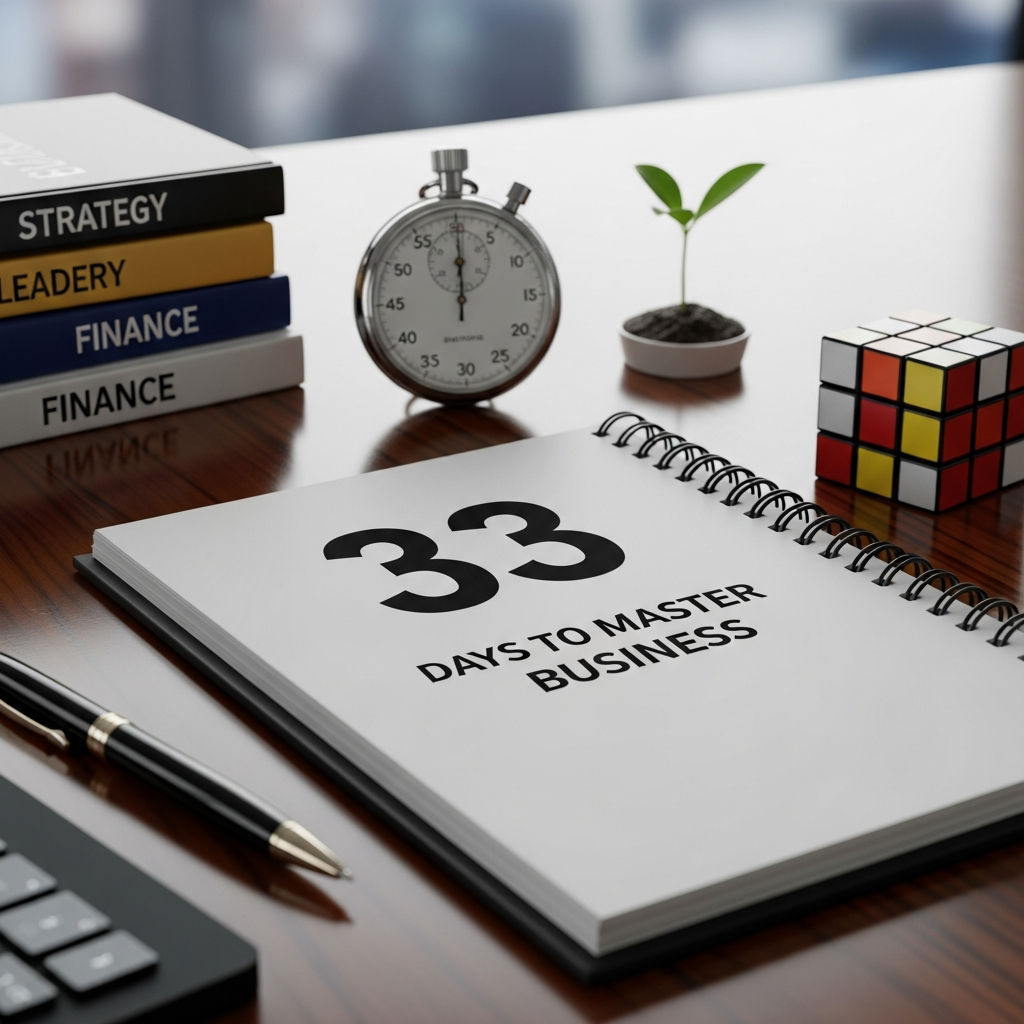
How to Master Business in 38 Days: Your Accelerated Guide to Entrepreneurial Success
The idea of “mastering business” often conjures images of decades of experience, countless trials, and a long, arduous journey. But what if you could accelerate that process? What if you could gain a robust foundational understanding and actionable skills, setting you on a trajectory for significant growth, not in years, but in just 38 intense, focused days?
This isn’t about becoming a seasoned CEO overnight. It’s about an audacious, rapid-fire sprint to build a strong entrepreneurial launchpad. It’s about distilling the essence of business fundamentals into a hyper-focused curriculum, designed to equip you with the knowledge and tools to confidently kickstart and propel your venture forward. Within these 38 days, you will learn to think like an entrepreneur, execute like a startup, and lay the groundwork for sustainable success.
The Mindset Shift: Embracing Accelerated Learning
To truly master business in 38 days, you need more than just a plan; you need the right mindset. This isn’t a casual endeavor. It requires dedication, focus, and a willingness to prioritize action over perfection.
Dedication and Focus
- Eliminate Distractions: Treat these 38 days like a full-time, immersive boot camp. Minimize non-essential commitments and dedicate significant hours each day to learning and implementation.
- Consistency is Key: Even if you have limited time, ensure consistent effort daily. Short, focused bursts are more effective than sporadic, long sessions.
Action Over Perfection
- “Done is Better Than Perfect”: This mantra will be your guiding star. Rapid prototyping, testing, and getting feedback are crucial. Don’t get bogged down in perfecting every detail before launch.
- Learn from Failure Quickly: Not everything will work the first time. Embrace mistakes as learning opportunities. Analyze, adapt, and move forward without delay.
Phase 1: Foundation & Ideation (Days 1-7)
The initial week is all about building a solid conceptual framework for your business idea and understanding the market you intend to serve.
Day 1-2: Defining Your Vision & Niche
Start with clarity. What problem do you want to solve, and for whom?
- Identify a Market Gap: Look for underserved needs or areas where existing solutions fall short.
- Define Your Ideal Customer (Target Audience): Who will benefit most from your product or service? Understand their demographics, psychographics, and pain points.
- What Unique Value Do You Offer? How will your solution be different and better than what’s currently available?
Day 3-4: Business Model Canvas & Lean Planning
The Business Model Canvas (BMC) is a powerful tool for quickly mapping out your business idea on a single page.
- Key Partners, Activities, Resources: What do you need to operate?
- Value Propositions, Customer Relationships, Channels: What do you offer, how do you interact, and how do you reach customers?
- Customer Segments, Cost Structure, Revenue Streams: Who are you serving, what are your expenses, and how will you make money?
Day 5-7: Market Research & Validation
Before you build, validate. Don’t assume people want what you’re offering.
- Talk to Potential Customers: Conduct informal interviews, surveys, or focus groups to gather feedback on your idea.
- Competitor Analysis: Research direct and indirect competitors. What are their strengths and weaknesses? How can you differentiate?
- Basic MVP (Minimum Viable Product) Concept: What’s the smallest possible version of your product or service that can deliver core value and be tested?
Phase 2: Product/Service Development & Branding (Days 8-16)
Now that you have a validated idea, it’s time to bring it to life and give it an identity.
Day 8-11: Crafting Your MVP
Focus on functionality and solving the primary problem identified in Phase 1.
- Focus on Core Functionality: Strip away all non-essential features. What is the absolute minimum your product/service needs to do to deliver value?
- Iterative Design: Build, test, gather feedback, and refine. Don’t overbuild; keep it lean.
Day 12-14: Essential Branding & Messaging
Your brand is more than just a logo; it’s the sum of all perceptions people have of your business.
- Name & Logo (Simple, Recognizable): Choose a name that’s memorable and available. Create a simple logo that reflects your brand identity.
- Unique Selling Proposition (USP): Clearly articulate what makes your offering unique and why customers should choose you.
- Consistent Messaging: Ensure your brand voice and message are consistent across all communication channels.
Day 15-16: Basic Legal & Admin Setup
Get the essential bureaucratic hurdles out of the way quickly.

- Business Registration: Research basic requirements (sole proprietor, LLC, etc.) and complete initial registrations.
- Business Bank Account: Separate your personal and business finances immediately.
- Essential Tools: Set up a professional email, consider a simple website builder (like Squarespace or Wix), and basic project management tools.
Phase 3: Marketing & Sales Launchpad (Days 17-27)
With your product or service ready and your brand defined, it’s time to tell the world and start making sales.
Day 17-20: Digital Presence & Content Strategy
Even an MVP needs a way to be discovered.
- Simple Website/Landing Page: Create a page that clearly explains your offering, its benefits, and a call to action.
- Social Media Presence: Choose 1-2 platforms where your target audience is most active and create engaging profiles.
- Content That Educates/Solves Problems: Start creating valuable content (blog posts, short videos) that addresses your audience’s pain points.
Day 21-24: Customer Acquisition & Lead Generation
Actively seek out your first customers.
- Organic Reach & Networking: Leverage your personal network, online communities, and industry events (even virtual ones).
- Simple Ad Campaigns: Experiment with low-budget, highly targeted ad campaigns on platforms like Facebook or Instagram to test interest.
- Email List Building: Start collecting email addresses from interested prospects through your website or landing page.
Day 25-27: Sales Funnel & Conversion
Understand how to turn interest into income.
- Understanding the Customer Journey: Map out the steps a potential customer takes from awareness to purchase.
- Call to Actions (CTAs): Ensure every piece of marketing has a clear, compelling CTA.
- Basic Sales Script/Pitch: Develop a concise, persuasive way to explain your offering and close a sale.
Phase 4: Financials, Operations & Optimization (Days 28-38)
The final phase focuses on the practicalities of running your business and setting it up for ongoing improvement.
Day 28-31: Financial Fundamentals
Money makes the business go round. Understand its flow.
- Pricing Strategy: Determine a pricing model that covers costs, reflects value, and is competitive.
- Basic Budgeting & Expense Tracking: Monitor your income and outgoing expenses using simple spreadsheets or accounting software.
- Understanding Profit Margins: Know the difference between revenue and profit.
Day 32-35: Operational Efficiency
How do you deliver your product or service effectively?
- Streamlining Processes: Document your core workflows to ensure consistency and efficiency.
- Customer Service Basics: Establish clear channels for customer support and strive for quick, helpful responses.
- Delegation/Automation (If Applicable): Identify repetitive tasks that could eventually be delegated or automated.
Day 36-38: Review, Refine & Future Planning
The sprint concludes, but the journey continues.
- Analyze Initial Data: Review website traffic, social media engagement, sales numbers, and customer feedback. What’s working? What isn’t?
- Identify Areas for Improvement: Based on your data, pinpoint the biggest opportunities for iteration and growth.
- Plan for Sustainable Growth: Develop a roadmap for the next 90 days. What are your key milestones and objectives post-38-day sprint?
Conclusion: Your 38-Day Business Launchpad
While “mastering business” is a lifelong endeavor of continuous learning and adaptation, these 38 days provide an unparalleled acceleration. You’ve transitioned from an idea to a tangible, market-tested offering, equipped with essential skills in strategy, marketing, sales, and operations. You’ve cultivated a vital entrepreneurial mindset of rapid execution and resilience.
You haven’t just learned about business; you’ve actively built one. This intensive sprint has forged crucial habits of discipline, rapid iteration, and continuous learning. Take this robust foundation and propel your venture forward, continually refining, expanding, and truly mastering the art of business one day at a time. The clock for your next phase of growth starts now.